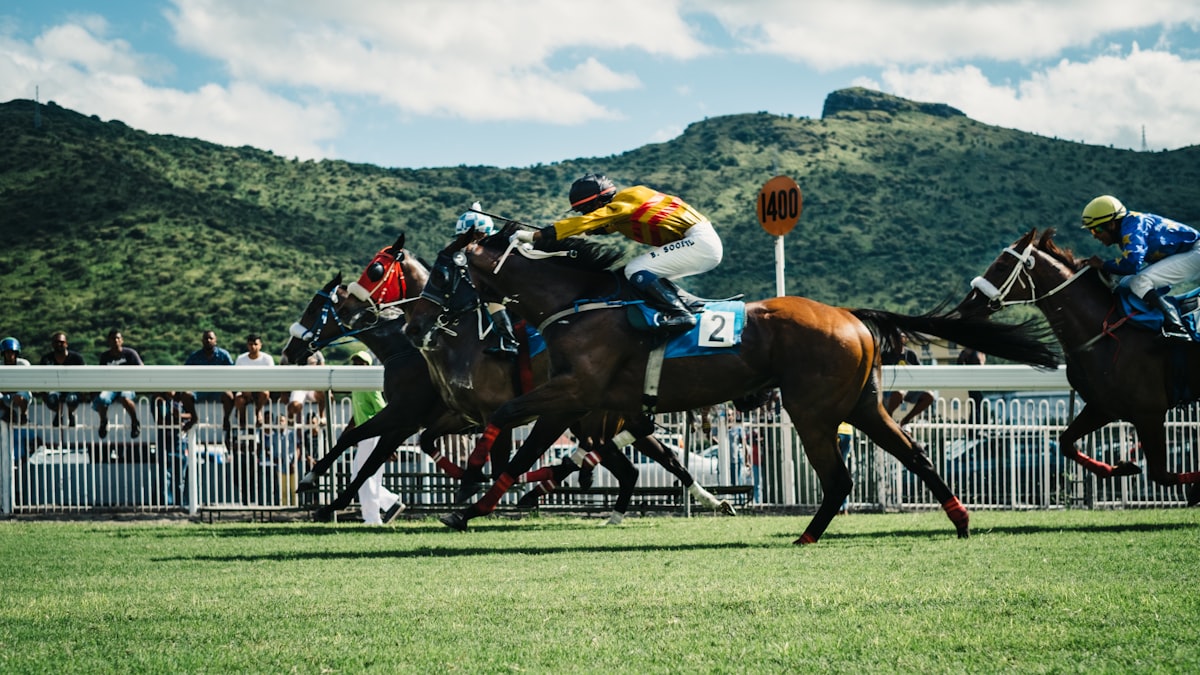
The Cheltenham Festival is the biggest event in jump racing. Four days in March, 28 races, and more money wagered than any other meeting in the British and Irish racing calendar. If you bet on horse racing at all, you’ve probably had a Cheltenham bet. But the Festival is its own world with its own rules, and what works in regular midweek racing doesn’t always apply here.
How the Festival works
The meeting takes place over four days, Tuesday to Friday, at Cheltenham Racecourse in Gloucestershire. Each day has seven races, and each race is a championship event or a major handicap. The quality is as high as jump racing gets.
The four days have names and themes:
Tuesday — Champion Day. The opening day, headlined by the Champion Hurdle (the two-mile hurdling championship) and the Arkle Trophy (novice chasers over two miles). Also features the Supreme Novices’ Hurdle, which is traditionally the first race of the meeting and one of the hardest to predict.
Wednesday — Ladies Day. The centrepiece is the Champion Chase (formerly the Queen Mother Champion Chase) over two miles. This is usually one of the more predictable races — two-mile chasers tend to be established and well-known. The Cross Country Chase also features on this day.
Thursday — St Patrick’s Thursday. The Stayers’ Hurdle (three miles) and the Ryanair Chase (two and a half miles) headline. Thursday afternoon tends to produce competitive handicaps.
Friday — Gold Cup Day. The festival’s climax. The Cheltenham Gold Cup over three miles and two furlongs is the blue riband of jump racing, the race everyone remembers. The day also includes the Triumph Hurdle for four-year-olds and the Martin Pipe Conditional Jockeys’ Handicap Hurdle, which often throws up a big-priced winner.
The race types
Understanding the difference between the race types matters for betting.
Championship races (Champion Hurdle, Champion Chase, Gold Cup, Stayers’ Hurdle, Ryanair Chase). These are the highest grade — Group 1 equivalent. Small fields, usually 8-15 runners, the best horses in training. Form is reasonably solid and the market leaders usually have legitimate claims. Upsets happen (remember Norton’s Coin at 100/1 in the 1990 Gold Cup), but generally the cream rises.
Novice championship races (Supreme Novices’ Hurdle, Ballymore Novices’ Hurdle, Turners Novices’ Chase, etc.). These feature horses in their first season over hurdles or fences. The form is less established, the horses are less exposed, and the results are less predictable. The Supreme in particular has a reputation for producing surprises — the opening race of the Festival with a field full of lightly-raced novices and a hyped-up crowd is a volatile combination.
Handicaps (County Hurdle, Grand Annual, Coral Cup, Boodles Hurdle, Martin Pipe). These are the punters’ races. Big fields, competitive, and notoriously hard to solve. They’re also where the each-way value often lives. A big-priced winner in the County Hurdle or Martin Pipe is almost a tradition.
Ante-post betting versus day-of
This is the biggest decision at Cheltenham: when to bet.
Ante-post means betting before the day of the race, usually weeks or months in advance. The prices are bigger because you’re taking on the risk that the horse might not run (injuries, illness, the ground going wrong). If it doesn’t run, you lose your stake. No refunds on ante-post bets.
Day-of means waiting until the declarations are confirmed and betting on the morning of or at the course. Prices are shorter but you know the horse is definitely running, the ground is confirmed, and you have the latest information.
The ante-post market for Cheltenham starts forming in the autumn. After big trials — the Christmas meetings at Kempton and Leopardstown, the Dublin Racing Festival in February — prices can move dramatically. A horse that wins the Irish Gold Cup at Leopardstown might shorten from 8/1 to 3/1 for the Cheltenham Gold Cup overnight.
If you want to bet ante-post, the value is usually best in the weeks before the key trials. Once a horse wins a trial impressively, the price collapses. Getting on before the trial, if you’ve identified the horse as a live contender, is where the ante-post edge lies. The risk, of course, is that the horse might run badly in the trial or get injured.
For the handicaps, ante-post betting is particularly risky because the weights might change and the final declarations can remove key horses. But the prices are correspondingly bigger. An each-way ante-post bet on a horse at 33/1 for the County Hurdle, when the same horse will be 12/1 on the day if it runs well in its final prep race, can be excellent value if you accept the non-runner risk.
The Irish factor
You cannot understand Cheltenham betting without understanding the Irish influence. Irish-trained horses, particularly from the big operations of Willie Mullins and Gordon Elliott, dominate the Festival. In recent years, Irish-trained horses have won roughly 60% or more of the races across the four days.
Mullins in particular has an astonishing Festival record. His operation is so large and so well-targeted that he typically has strong contenders in nearly every race. If a Mullins horse is favourite, the market is usually about right — his horses are well-known and well-backed by the Irish punters who follow them all season.
The opportunities often lie with the less obvious Irish runners. Horses from smaller Irish yards — Gavin Cromwell, Henry de Bromhead’s second strings, Emmet Mullins — sometimes fly under the radar of the British market. The Irish form can be harder to interpret from a British perspective, and mismatches between Irish and British form assessments create value.
Ground and conditions
Cheltenham’s ground is usually good to soft or soft during Festival week. In some years it’s been genuinely heavy. In the odd year (2023 for instance was notably quick) it rides good or even good to firm in places.
The ground matters enormously because many of the horses running are specialists. Some love it soft — Kauto Star used to produce his best when there was some cut in the ground. Others need a sounder surface. Al Boum Photo won two Gold Cups on ground that had dried out more than expected.
If you’re betting ante-post, the ground is a risk factor you can’t control. If your horse needs soft ground and the week turns dry, you’re stuck. Some punters wait until the Tuesday morning, assess the going report, and bet from there. It’s a more conservative approach but removes a genuine source of uncertainty.
The other conditions factor is the weather during the meeting itself. Rain on Wednesday night can change the ground for Thursday and Friday. Cheltenham’s drainage is good but the track rides differently after heavy rain, particularly on the New Course (used for Gold Cup day). Following the going updates throughout the week, rather than assuming what the ground will be, is worth the effort.
Common mistakes
Backing too many horses. The Festival has 28 races. If you back something in every race, or multiple horses in several races, you need an extraordinary strike rate to come out ahead. The overround on Festival races is higher than normal because bookmakers know the volume of money coming in. Be selective. Four or five strong bets across the week is more likely to be profitable than 28 speculative ones.
Following the crowd on Irish favourites. The really obvious Irish fancies are usually shorter than they should be. The Irish punters are patriotic and they bet heavily. A horse that should be 5/2 ends up 7/4 because of the weight of Irish money. This doesn’t mean they’re bad bets — they win plenty — but the value has been squeezed. Sometimes the value is in opposing them, or at least looking past them.
Ignoring the draw and position. Cheltenham isn’t a flat track where stall draws matter, but race position is important. Front-runners at Cheltenham have a mixed record because the Old Course in particular has a stiff uphill finish that catches out horses who have been doing too much. Hold-up horses tend to have a slight edge statistically, particularly in the championship races. Constitution Hill is an obvious exception — he led all the way in the 2023 Champion Hurdle — but for most horses, getting into a rhythm and producing a late run suits the track.
Underestimating novice races. The novice championship races are some of the most open at the Festival. Horses are lightly raced, form lines are thin, and the market is often wrong. The Supreme Novices’ Hurdle has produced a string of surprises over the years. If you’re going to have a speculative each-way bet at a big price, the novice races are often the best place to look.
Not shopping around on prices. This applies to all betting, but it’s amplified at Cheltenham because of the volume and the promotional offers. Different bookmakers will have different prices, different each-way terms, and different extra-place offers. Checking three or four bookmakers before placing a bet can easily be the difference between 10/1 and 8/1 on the same horse. Over a week of betting, that adds up.
A sensible approach
Study the trials form but don’t overweight it. The Christmas meetings and the Dublin Racing Festival are important, but horses peak and dip, and a horse that was brilliant in February might not reproduce it in March.
Identify your strongest opinions and concentrate your stakes there. One well-researched £50 bet is worth more than ten £5 punts.
Take best prices early where you have BOG (Best Odds Guaranteed). Festival prices tend to shorten as the week approaches, especially on the main fancies. If you like a horse at 6/1 on Monday and it’s likely to be 4/1 by Friday morning, take the 6/1 with BOG.
Use each-way betting in the handicaps. Big-field Festival handicaps with extra-place promotions are prime each-way territory. The County Hurdle, the Martin Pipe, and the Grand Annual regularly produce 20/1 and 33/1 each-way winners.
And accept that Cheltenham is hard. The best form students in the country have been studying these races for months. There’s no hidden edge that nobody else has noticed. But there is value in being disciplined, being selective, and not getting caught up in the excitement of the week. The punters who do best at Cheltenham are usually the ones who say “no bet” more often than they say “go on then.”