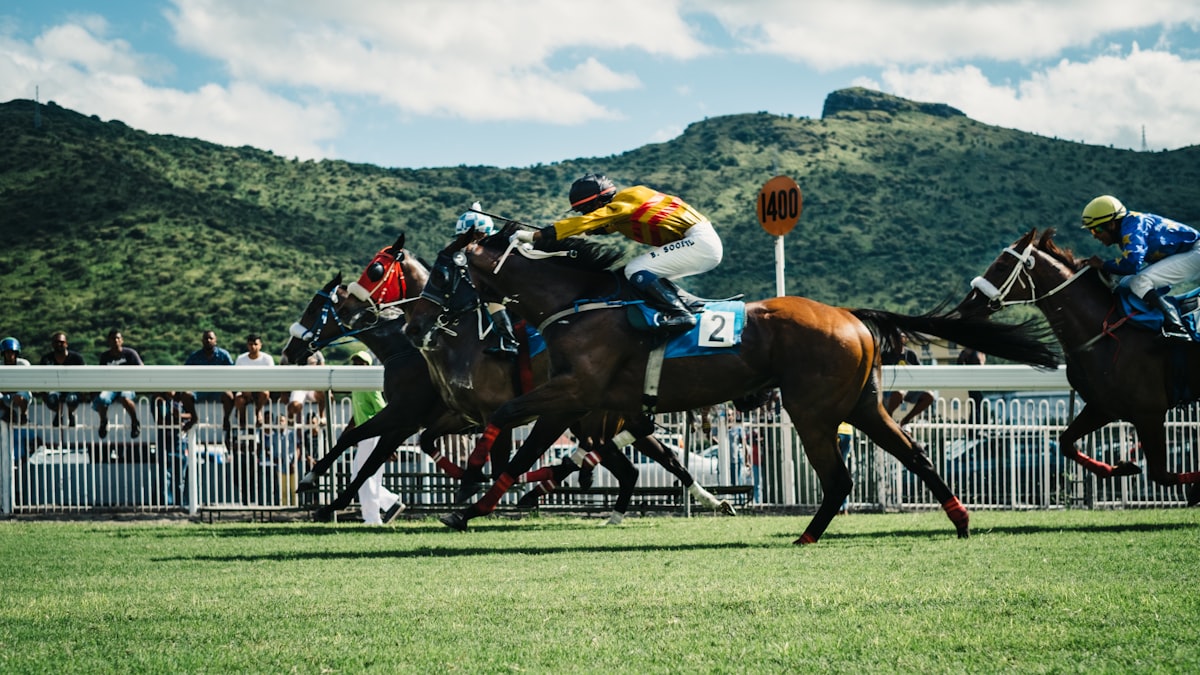
Draw bias is one of those things that gets mentioned constantly but is often either overstated or applied too loosely. “Low draw at Chester” has become a reflexive thing people say without necessarily knowing the specifics. So here’s what we know from the data, where draw bias is real and meaningful, and where it’s mostly noise.
What draw bias is and why it happens
When horses line up in stalls for a flat race, each horse has a numbered position. Stall 1 is on the inside rail (the left-hand side on most British courses), and the numbers go up towards the outside. On a straight course, stall 1 is usually on the far side (stands’ side) or near side depending on the track.
Draw bias occurs when certain stall positions have a consistently better win rate than others, after accounting for the quality of the horses drawn there. It happens because of track geometry and ground conditions.
On a tight, turning track, horses drawn low (near the inside) have less ground to cover on the bends. That’s a physical advantage, and it’s predictable. On straight courses, the bias comes from the ground — if one side of the track has been watered or raced on more, the going differs across the width, and horses on the better strip of ground have an advantage.
The key word is “consistently.” In any individual race, a high draw can win at Chester or a low draw can win at Beverley. Bias is a statistical tendency, not a guarantee. It shows up over hundreds of races, not in any single one.
Courses with genuine, persistent draw bias
Not all courses have meaningful draw bias. At many tracks, over large samples, the stall position makes no statistically significant difference. But at a handful of courses, the bias is real, persistent, and big enough to matter for betting.
Chester
The big one. Chester is a tight, left-handed oval, barely a mile round. The bends are sharp and the straight is short. Horses drawn low have a shorter path around every bend, and at distances of seven furlongs and beyond, this adds up.
Over races of 7f and further at Chester, low draws (stalls 1-4) have won at roughly 30% versus about 17% for high draws (stalls 9+). That gap is large enough to affect the outcome of most races. Over sprint distances, the bias is smaller because there are fewer bends to navigate, but it’s still present.
The bias is strong enough that good handicappers factor it in. A horse drawn 1 at Chester over a mile has a genuine structural advantage, and the market usually reflects this — low draws tend to be shorter in the betting. But the market doesn’t always fully price it in, especially in big-field handicaps where other factors muddy the picture.
Beverley
Beverley is a right-handed track with a pronounced uphill finish. Over sprint distances (5f), there’s a persistent high-draw bias. Horses drawn high (towards the far rail) have a markedly better record. This is partly about the track geometry and partly about where the better ground tends to be.
Over longer distances at Beverley, the bias flips and is less clear-cut. But for 5f races, if you’re not factoring in the draw, you’re missing something significant.
Musselburgh
Musselburgh over sprint distances has shown a stands’ side (high draw) bias in many seasons, though it’s less consistent than Chester. The bias tends to be stronger when the ground is on the soft side, because the rail provides something to race against and the ground on the stands’ side is often less chewed up.
Thirsk
Thirsk’s 6f and 7f starts produce a notable low-draw bias. The course layout means low-drawn horses have less distance to travel to the first bend. Over 50+ races at these distances, stalls 1-4 have outperformed significantly.
Goodwood
Goodwood is interesting because the bias varies by distance. Over 5f, there’s a high-draw bias (the far side group tends to dominate). Over longer distances, particularly over a mile, low draws have the advantage because of the tight turn into the straight.
At the Glorious Goodwood meeting, draw analysis appears in every preview for good reason. In big-field handicaps over 6f, the field often splits into two groups (stands’ side and far side), and which group has the better ground can determine the result. This changes from day to day depending on conditions, which makes it harder to predict in advance.
Ascot
At Royal Ascot, the straight course (5f, 6f, 7f, and 1m on the straight course) has produced varying biases depending on the year and the ground. In some years, the stands’ side (high draws) dominates; in others, the far side (low draws) has the edge. The watering regime matters enormously here. Ascot’s groundstaff try to produce even going across the track, but it doesn’t always work perfectly.
The point is that Ascot’s draw bias isn’t fixed. You need to watch the first couple of races on each day of a meeting and see which side is favoured before committing to a draw-based angle.
Courses where draw bias is overrated
At plenty of courses, the data shows minimal or no meaningful draw bias. Newmarket’s Rowley Mile is largely fair. Doncaster over most distances is fairly neutral. Sandown, Haydock, Kempton (the all-weather) — the draw matters less than most people think at these tracks over most distances.
That doesn’t mean it never matters there. On very soft ground, a course that’s normally fair can develop a temporary bias because one rail rides better than the other. But as a persistent, predictable factor, the bias at these courses is small enough that it shouldn’t drive your betting.
How going affects draw bias
This is critical and often overlooked. Draw bias isn’t fixed at every course; it interacts with the going.
On good-to-firm ground, most courses are relatively fair because the surface is consistent across the track width. When the ground gets soft, differences emerge. The inside rail at a tight track might get cut up by runners, making the ground worse there as the meeting progresses. Or the far side of a straight course might drain better and ride faster.
At Chester on soft ground, the low-draw bias actually weakens slightly in some studies, because the inside ground gets chewed up and the advantage of the shorter route is offset by worse going. On good ground, the bias is at its strongest.
At Goodwood on soft ground, the stands’ side bias in sprints tends to strengthen because the drainage favours that part of the track.
The practical implication: check the going before applying draw stats. A course’s bias might be strong on one type of ground and weak or reversed on another.
How to check draw stats yourself
Several free resources publish draw statistics:
Racing Post. The course guide section includes draw data for every British course, broken down by distance. It shows win percentages by stall grouping (low, middle, high) and it’s updated regularly. This is probably the most accessible starting point.
Timeform. Their draw data is more detailed and includes impact values, which adjust for the quality of horses in each stall position. This matters because if all the favourites happen to be drawn low at a certain course, the raw win percentage for low draws will be inflated. Impact values correct for this.
At The Races. Their course guides have draw analysis with visual charts. Useful for a quick look.
Betfair. Before major flat meetings, Betfair usually publishes draw analysis articles that cover course-specific trends.
You can also build your own draw database if you have access to historical results data. The advantage of doing this yourself is that you can filter by going, field size, and distance in combination, which published stats sometimes don’t allow.
When to factor draw into your betting
Draw bias should feature in your thinking when three conditions are met:
The course has a proven, persistent bias at the distance in question. Not a suspicion, not something you read once, but backed by a decent sample of 100+ races.
The field is big enough for the draw to matter. In a five-runner race, the draw almost never matters because every horse has room to manoeuvre and the jockey can position wherever they like. In a 20-runner sprint at Beverley, the draw is a significant factor.
The going is consistent with when the bias operates. If the bias is strongest on good ground and it’s heavy, adjust your expectations.
When all three apply, the draw can be the difference between a horse being value and being a bad bet. A well-handicapped horse drawn on the wrong side at Chester can still win, but it has to overcome a structural disadvantage that costs it multiple lengths. At a fair course with a small field, the same draw concern barely registers.
Treat draw bias as one factor among several, weight it heavily at courses where the data is strong, and mostly ignore it where the data says it’s noise. That’s about as sophisticated as it needs to be.