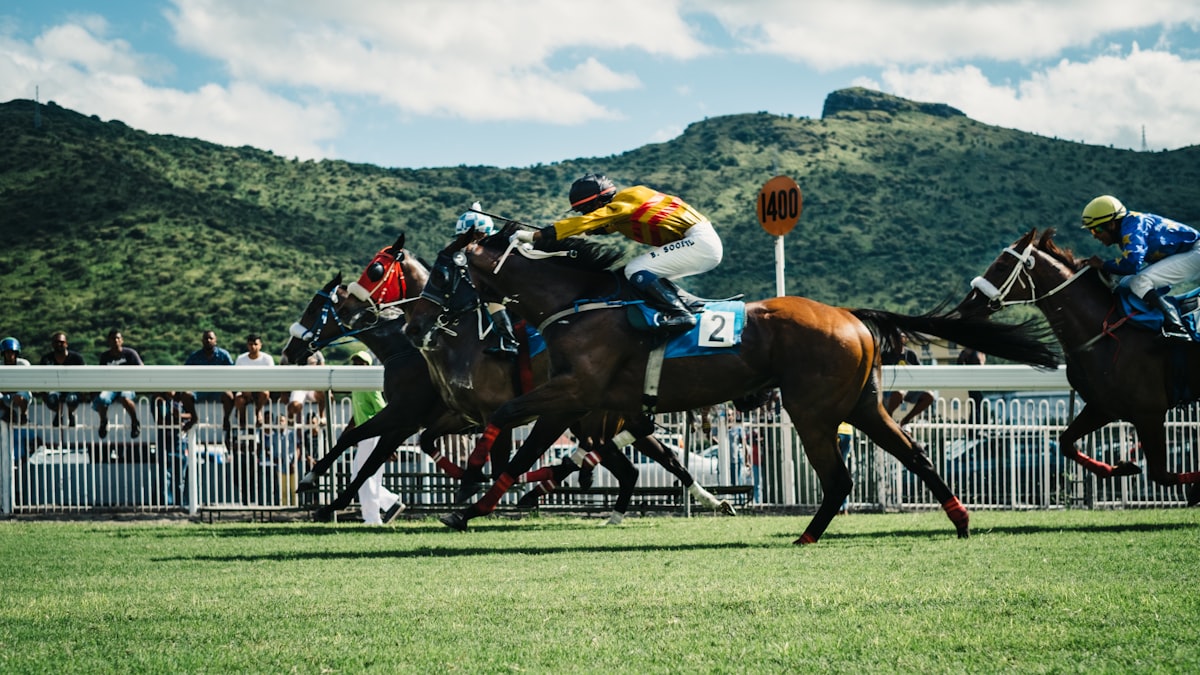
Speed figures try to answer a simple question: how fast did this horse actually run, accounting for the conditions? The raw finishing time of a race tells you something, but not much on its own. A horse that runs 7 furlongs in 1 minute 24 seconds on firm ground at Ascot and another that runs 7 furlongs in 1 minute 29 seconds on heavy ground at Catterick — which one produced the better performance? You can’t tell from the times alone. Speed figures exist to make those comparisons possible.
What speed figures measure
At their core, speed figures convert a horse’s performance into a single number that adjusts for the variables that affect race times: the going, the course, the distance, and the pace of the race.
A horse running on heavy ground will record a slower time than the same horse on firm ground. That doesn’t mean it ran worse. A good speed figure takes the going into account and asks: given the conditions, how fast was this performance relative to average?
The same applies to different courses. Ascot’s straight mile and Chester’s tight mile produce very different times, even on identical going. Speed figures normalise for this.
The output is a number. Higher is better. The scales differ between providers, which can be confusing, but within each system, the principle is the same.
The main speed figure providers
Three sets of speed figures dominate in British and Irish racing. They use different methods and sometimes disagree, which is useful because when they agree, you can be more confident, and when they disagree, it’s worth understanding why.
Racing Post Rating (RPR)
The Racing Post’s own rating, published for every runner in the paper and on the website. RPR is probably the most widely used speed figure among British punters because it’s the most accessible.
RPR uses a combination of time-based analysis and form-based collateral. The figure isn’t purely derived from the clock — the Racing Post handicappers also consider the quality of the form, how the race was run, and whether the performance was visually impressive. This means RPR is a blend of speed and judgement.
The scale runs from about 30 (the slowest horses) to 140+ (the very best). A typical decent handicapper on the flat might rate in the 85-100 range. Over jumps, the scale is similar but the average handicapper sits a bit lower.
RPR is useful, accessible, and free (with a Racing Post subscription). Its limitation is that the judgement element means two different people might assign different RPRs to the same performance. It’s not purely objective.
Timeform ratings
Timeform has been producing speed figures since the 1940s and their operation is the most thorough in the business. Timeform figures are derived primarily from time-based analysis with sophisticated going corrections, and they also include a visual assessment element.
Timeform ratings use a scale where 100 represents an average horse. The best flat horses in a generation might reach 135-140 (Frankel was rated 147, the highest Timeform figure ever). The best jumpers might reach 180+ on the chase scale (though the jump and flat scales aren’t directly comparable — jump ratings are inflated by the longer distances).
A key feature of Timeform is the symbols they use alongside the figure:
- p means the horse is likely to improve
- P means likely to improve significantly
- + means the rating might not represent the horse’s full ability
- d means the horse might be unreliable or is declining
These qualitative markers add context that a bare number can’t convey. A horse rated 110p is a different prospect from one rated 110d, even though the number is the same.
Timeform data requires a subscription and is more expensive than RPR, but it’s generally considered the gold standard for speed figures in British racing.
TopSpeed (Racing Post)
TopSpeed is the Racing Post’s alternative to RPR, and it’s a purely time-based figure. No visual assessment, no form judgement — just the clock, adjusted for going, wind, and course.
The TopSpeed scale is different from RPR. The numbers tend to be lower, and the distributions are different. A flat handicapper might have a TopSpeed of 75 compared to an RPR of 90. The absolute numbers don’t matter; what matters is how they compare between horses.
TopSpeed can be more objective than RPR because it strips out human judgement, but it can also be misleading in races where the pace was unusual. A slowly-run race where the horses sprinted in the last two furlongs can produce misleading TopSpeed figures because the overall time was slow but the finish was fast. A truly-run race over the same course and distance would produce more reliable figures.
TopSpeed is published in the Racing Post alongside RPR.
How to use speed figures in practice
Speed figures are most useful for three things:
Comparing horses in the same race. If Horse A’s best speed figure is 105 and Horse B’s is 95, that’s a meaningful difference — roughly 10 lengths. The question is whether the 105 performance was a one-off peak or repeatable, but it gives you a starting point.
Identifying improving horses. A horse whose last three speed figures are 85, 90, 95 is clearly progressing. One whose figures are 95, 88, 82 is going backwards. This trajectory matters more than any single figure.
Finding performances that the market has missed. Sometimes a horse produces a big speed figure in a race that didn’t attract much attention — a small-field midweek race at Wetherby or a low-grade handicap at Wolverhampton. If the figure suggests the horse ran to a level well above its current handicap mark, that’s worth investigating.
Comparing figures from different sources
When RPR, Timeform, and TopSpeed all agree that a horse ran a big race, you can be fairly confident it did. When they disagree, it’s interesting.
A horse might get a high TopSpeed but a modest RPR if the race was truly run (good pace throughout, honest time) but the visual impression wasn’t spectacular. The clock says it ran fast; the Racing Post handicapper wasn’t as impressed by the manner of it.
Conversely, a horse might get a big RPR but a modest TopSpeed if the race was slowly run but the horse “looked good” winning going away. The visual impression was of a horse well on top, but the time was nothing special.
Neither is necessarily right. The truth probably lies somewhere in between. But being aware of the disagreements helps you form a more nuanced view than relying on a single source.
Limitations of speed figures
Speed figures are useful tools but they have real limitations that punters sometimes overlook.
Going corrections are imperfect. Every speed figure provider adjusts for the going, but going descriptions are imprecise. “Good to soft” can mean many different things depending on the course, the time of year, and where on the track you’re measuring. The going correction applied to the race time is an estimate, and errors in that estimate flow directly into the speed figure.
Wind is hard to account for. A strong headwind in the straight adds seconds to a race time. A tailwind takes seconds off. Some providers attempt wind corrections; others don’t. On an exposed course like Newmarket’s Rowley Mile on a windy day, uncorrected wind effects can produce misleading figures.
Pace matters. A race that’s run at a muddling pace for the first half and sprints for the second will produce a different time (and different speed figure) than one where the pace was even throughout, even if the best horse in both races was the same. Speed figures partially account for this but never perfectly.
Small samples. A horse that’s had two career runs has two speed figures. That’s almost no information. You need a sequence of figures to see a pattern. One big figure from a horse with limited experience could be a genuine reflection of talent or it could be an outlier caused by conditions that won’t recur.
Jump racing is harder. Speed figures for jump racing are less reliable than for the flat. The distances are longer (increasing the effect of any going correction error), the obstacles slow horses variably depending on jumping ability, and the fields are smaller (less data to calibrate with). A Timeform jump rating of 155 has wider error bars than a flat rating of 115.
They don’t tell you about the future. Speed figures describe what happened. They don’t tell you whether a horse will reproduce that performance. A horse’s best figure might have come on its ideal ground, at its ideal course, with perfect conditions. Applying that figure as a prediction for a different course in different conditions is a leap of faith.
A sensible approach
Use speed figures as a starting point, not an endpoint. Check the RPR and Timeform figures for every horse in a race you’re analysing. Note the highest-rated and look at whether those figures came in comparable conditions. Factor in the trajectory — is the horse improving, consistent, or declining?
Then look beyond the numbers. Watch the race replays of those good figures. Was the horse doing it easily or scraping home? Was the pace honest or did it get a soft lead? Did it handle the ground or was it struggling through it? The figure plus the visual picture gives you a much fuller understanding than either alone.
Don’t get too attached to decimal precision. The difference between a speed figure of 102 and 104 is within the margin of error. The difference between 102 and 115 is meaningful. Use the figures to sort horses into tiers — this one’s clearly the fastest on figures, these three are closely matched, this one is well below — rather than trying to separate horses by a point or two.
And when the figures disagree with the market, ask why rather than assuming the figures are right and the market is wrong. Sometimes the figures have spotted something the market hasn’t. Sometimes the market knows something — a training setback, a jockey booking that signals confidence, a stable whisper — that the figures can’t capture. Both are imperfect, and the truth is usually in between.